Student Portal

Undergraduate theological study · Bratislava

Rooted in truth.
Formed for service.

A four-year, non-denominational school where students from every church background study Scripture deeply, grow in conviction, and prepare to serve with wisdom and humility.

Applications are not yet open. Feel free to explore and inquire.

Theological School crest featuring an open Bible, flame, crowned monogram, dove, and cross

Our vision

…to live a life worthy of the call…
Ephesians 4:1
4Academic years
4Modules each year
3Study pathways
96Credit hours
01

Four-year schoolSixteen intensive modules

02

September to MayFour modules each year

03

Morning + afternoonTwo courses per module

04

Every church backgroundA non-denominational welcome

Choose your pathway

One school.
Three ways to study.

Across four academic years, every pathway shares the same commitment to serious biblical study. Choose the level of participation that best fits your season and goals. The school's modular format allows students to pursue academic or non-academic education divided into four modules each year. The only mandate is personal attendance at the modules, a commitment every student must pledge to.

02

Focused formation

Certificate level

The Certificate program is tailored for those serving in ministries that do not require academic credits, or for those who desire to deepen their understanding by progressing through the program systematically. Unlike the Bachelor’s pathway, Certificate students receive a certificate confirming that they have attended all courses offered in the four-year program. Attendance at lectures is mandatory for both Bachelor’s and Certificate students.

Inquire about this pathway
03

Learn without assessment

Audit level

The Audit pathway offers a hassle-free way to choose whichever courses an individual wishes to attend. There are no program obligations, and participants may select courses according to their interests at the time. Class notes and additional books are available on request and charged separately.

Inquire about this pathway

Tuition & practical costs

Study made possible
through generosity.

Thanks to generous donations from individuals and churches, tuition for both the Bachelor’s and Certificate programs is essentially free. Students contribute only toward the practical costs of each module, including food, snacks, and accommodation. Accredited professors and their local churches contribute their time and often their own financial resources so that they can serve the church across Europe.

Full module package

€250per moduleIncludes course notes, additional literature, meals, snacks, and accommodation.

Own accommodation

€150per moduleFor students arranging their own accommodation - a 40% reduction from the full module cost. A further reduction may be available for students who skip lunch or make their own meal arrangements.

We strongly encourage local churches to help with these costs. Their support ultimately benefits the church through the ministry of the students they equip.

* Additional expenses may apply, including a monthly fee for the translation application for students who need translation and a student portal administration fee. The translation application costs approximately US$7 per month, and the portal fee is US$5 per year. The translation application only needs to be paid for during months when lectures take place; it is not necessary to subscribe for the entire year. At least two weeks before every module, students will be emailed a form where they confirm their attendance and can check their meals and accommodation for each day of the module.

The academic rhythm

Four modules in every academic year.

The four-year school follows the same annual rhythm: modules are generally held in September, December, March, and May. Each intensive runs from Monday through Friday, with one morning course and one afternoon course. Below is an example of the first-year modules.

ModuleMorningAfternoonFormat
01September

Course AIntroduction to Theology

Course BOrientation / Bibliology

Five daysMonday–Friday

02December

Course ASpiritual Disciplines

Course BEvangelism & Discipleship

Five daysMonday–Friday

03March

Course ASpiritual Formations

Course BHermeneutics

Five daysMonday–Friday

04May

Course ABiblical Theology

Course BBiblical Stewardship

Five daysMonday–Friday

Typical module day
Morning course
Shared break & community
Afternoon course
Exact dates confirmed each academic year

Module board

Follow the school
from module to module.

Once the school launches, this board will keep the most relevant module information in one place - what has just finished, what is happening now, and what comes next.

Past module

01

Recently completed

Module details coming after launch

Completed courses, teachers, and dates will be recorded here.

Current module

02

In progress

Live module details coming after launch

Morning classCourse to be confirmedPresented to first-year students
Afternoon classCourse to be confirmedPresented to first-year students

Next module

03

Coming up

Next module details coming after launch

Morning classCourse to be confirmedPresented to first-year students
Afternoon classCourse to be confirmedPresented to first-year students

This board will be updated as the academic calendar begins.

Curriculum overview

A first year for
faithful formation.

The standard first-year curriculum includes eight foundational courses. Their order may vary, but each course will be included during the first year. All courses focus on shaping the individual’s character and preparing each student to examine themselves, their standing before God, and their commitments.

Year 01

Eight foundational courses

  1. 01Bibliology and Orientation
  2. 02Introduction to Theology
  3. 03Biblical Theology
  4. 04Spiritual Formations
  5. 05Spiritual Disciplines
  6. 06Hermeneutics
  7. 07Evangelism and Discipleship
  8. 08Biblical Stewardship

First-year focus

Personal holinessEvangelismSound interpretation of Scripture

Across the remaining years

A broad theological foundation.

Courses offered throughout the rest of the program include:

  • Church History 1 & 2
  • Systematic Theology 1, 2 & 3
  • Apologetics
  • Peacemaker Course
  • Attributes of God
  • New Testament 1 & 2
  • Marriage & Family
  • Biblical Counseling
  • Ecclesiology
  • Biblical Ethics
  • New & Old Testament Exegesis
  • Research Methodology
  • Church Planting
  • Trinitarianism
  • Biblical Leadership
  • New & Old Testament Overview
  • Introduction to Preaching
  • Comparative Religions
  • Additional courses

About us

A vision shaped
through obedience.

The school model is proven in Southern Europe where it generated large interest and recognition because of its flexibility and immediate application in the ministry. The aim of the school is to equip leaders and to motivate them to do the same through discipleship, counselling, peacemaking and faithful preaching of the Word of God.

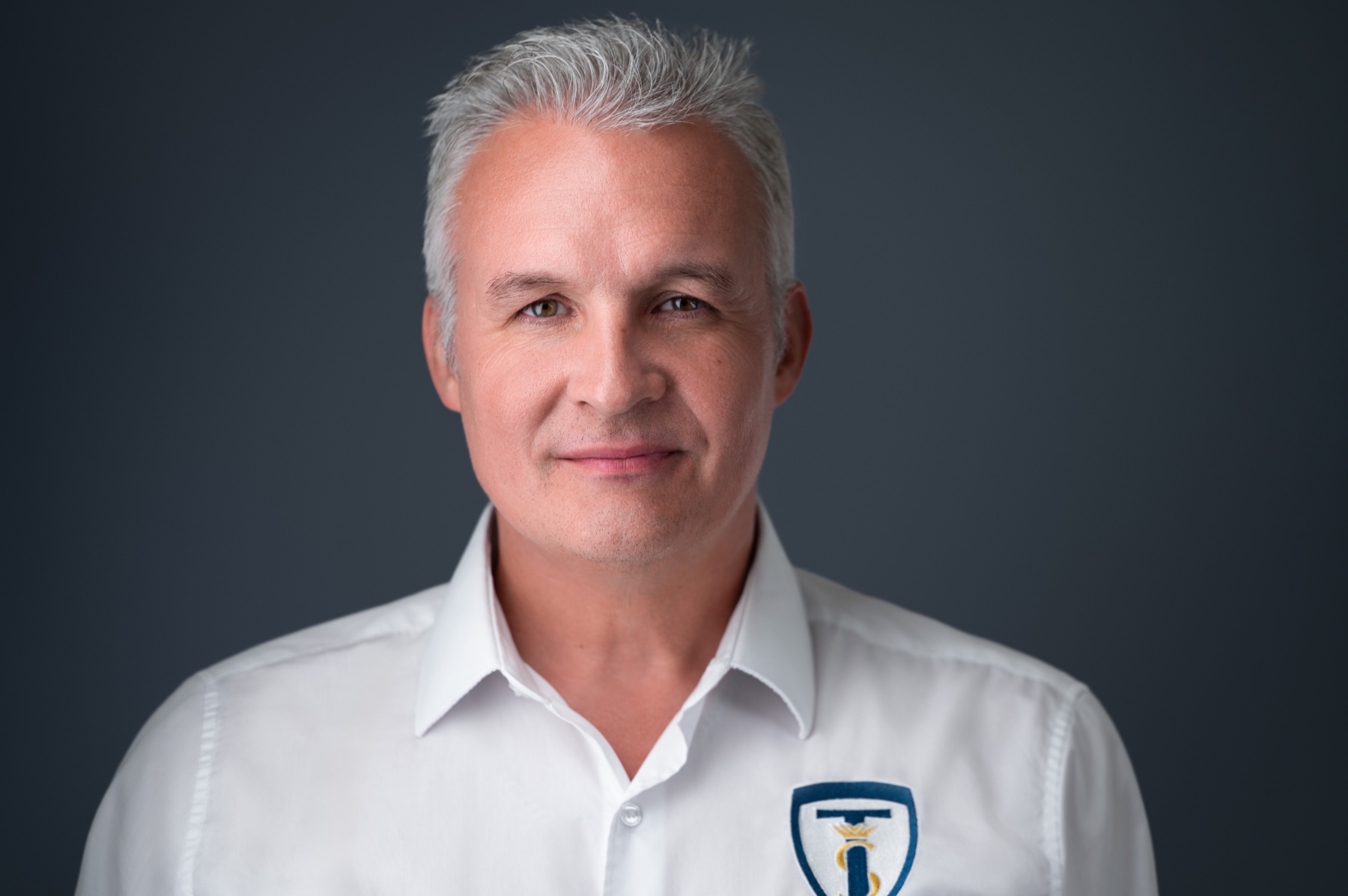
Miroslav
Miroslav

01 · The vision continues

A life transformed by grace.

Miroslav’s life is a testimony to how God can turn a person’s life around. He grew up in a Slovak village in Serbia, in a family with evangelical roots, although his parents were not part of that story. God, however, had other plans. His sovereign will became evident early in Miroslav’s life when he met his Saviour at the age of eleven.

One might think that life could only move upward from that point, but it was not so simple. After his conversion, Miroslav passed through nineteen years of nominal Christianity. Then the Lord ordained that one of His servants from across the world would speak directly into the life of His servant in Serbia. It was a shock to life that never leaves a person the same.

From that point forward, the Lord led Miroslav into a leadership position in his church, where he recognized his own insufficiency. That realization led him to pursue theological education - and opened an unexpected path.

After only one year in the Bachelor’s program, he was offered a part-time position in the school administration. He accepted after careful consideration and soon developed the school’s digital work, which had previously relied on pen and paper. Courses, quizzes, exams, and papers gradually moved online and became available at any time.

Course videos were already being published on YouTube by students who helped in this area as part of their tuition. When Covid closed most public schools, the value of fellowship became even clearer, yet the curriculum continued because the school was ready to work online. Throughout that difficult period, Miroslav served quietly in the background and helped the school move forward.

After gaining his BA at Baptist Theological School in Serbia, Miroslav pursued his master’s degree through the Deploy program provided by Grace Theological Seminary in Winona Lake, Indiana.

Having served for nearly six years as registrar and administrator, Miroslav developed skills he hopes to apply in the Slovak and wider Central European mission field. Before dedicating himself to full-time ministry in theological education, he also served as one of the pastors of his local church.

Coming from a Slovak background, he received a strong vision to establish a Bachelor’s-level theological school for leaders in Central Europe who have lived through similar circumstances - people who could not access theological education earlier in life but desire to be faithful in the ministry to which they were called. His desire is to help them serve their churches, uphold biblical leadership, and support pastors in their ministries.

Alongside his commitment to the school, Miroslav serves as European coordinator for Akademia, the Grace Seminary Deploy program.

He has been married to his wife, Gabriela, for more than 26 years, and the Lord has blessed them with two daughters, Ksenia and Hanna. Gabriela is currently pursuing bachelor’s-level theological education.

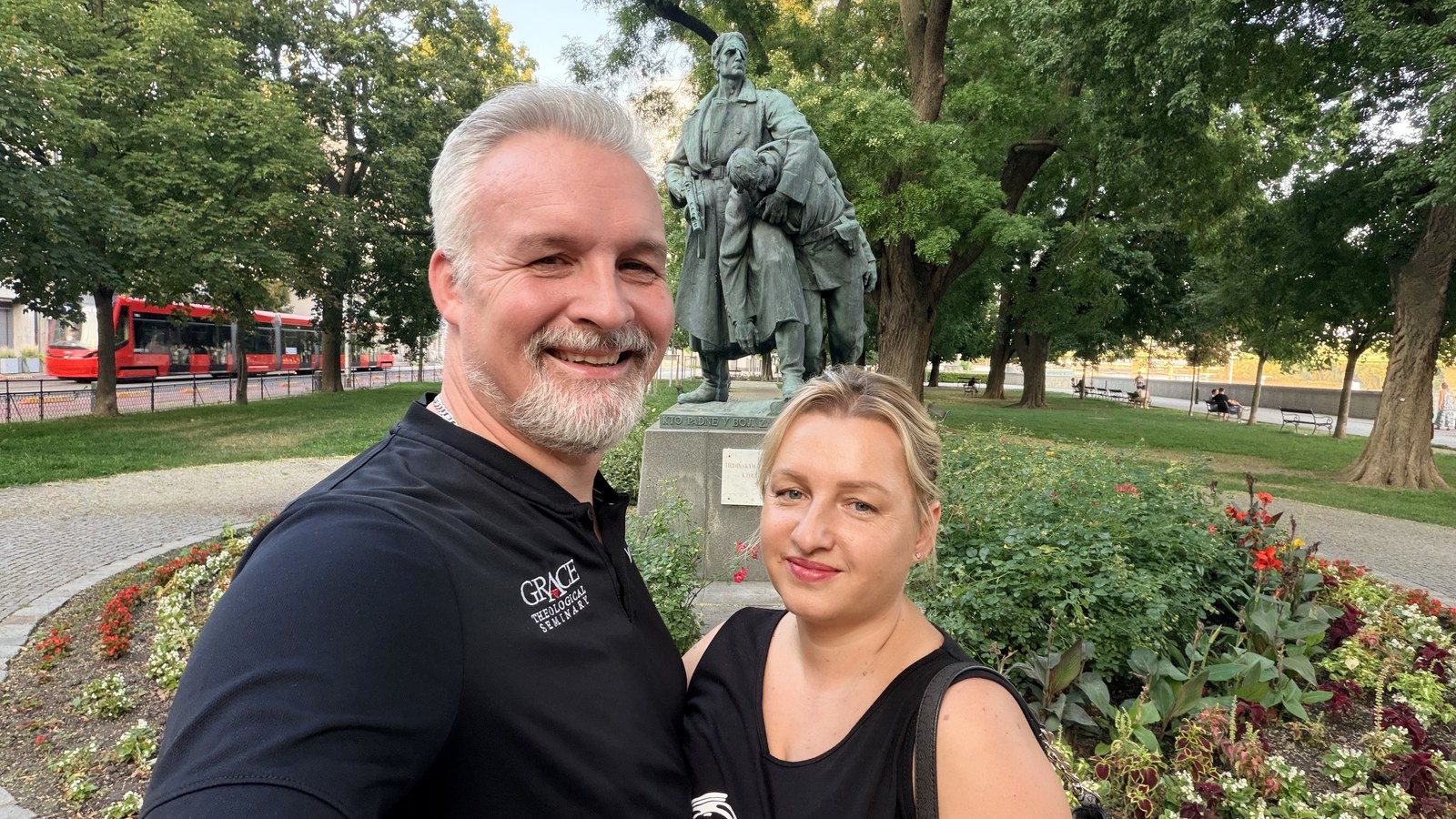
Miroslav and Gabriela
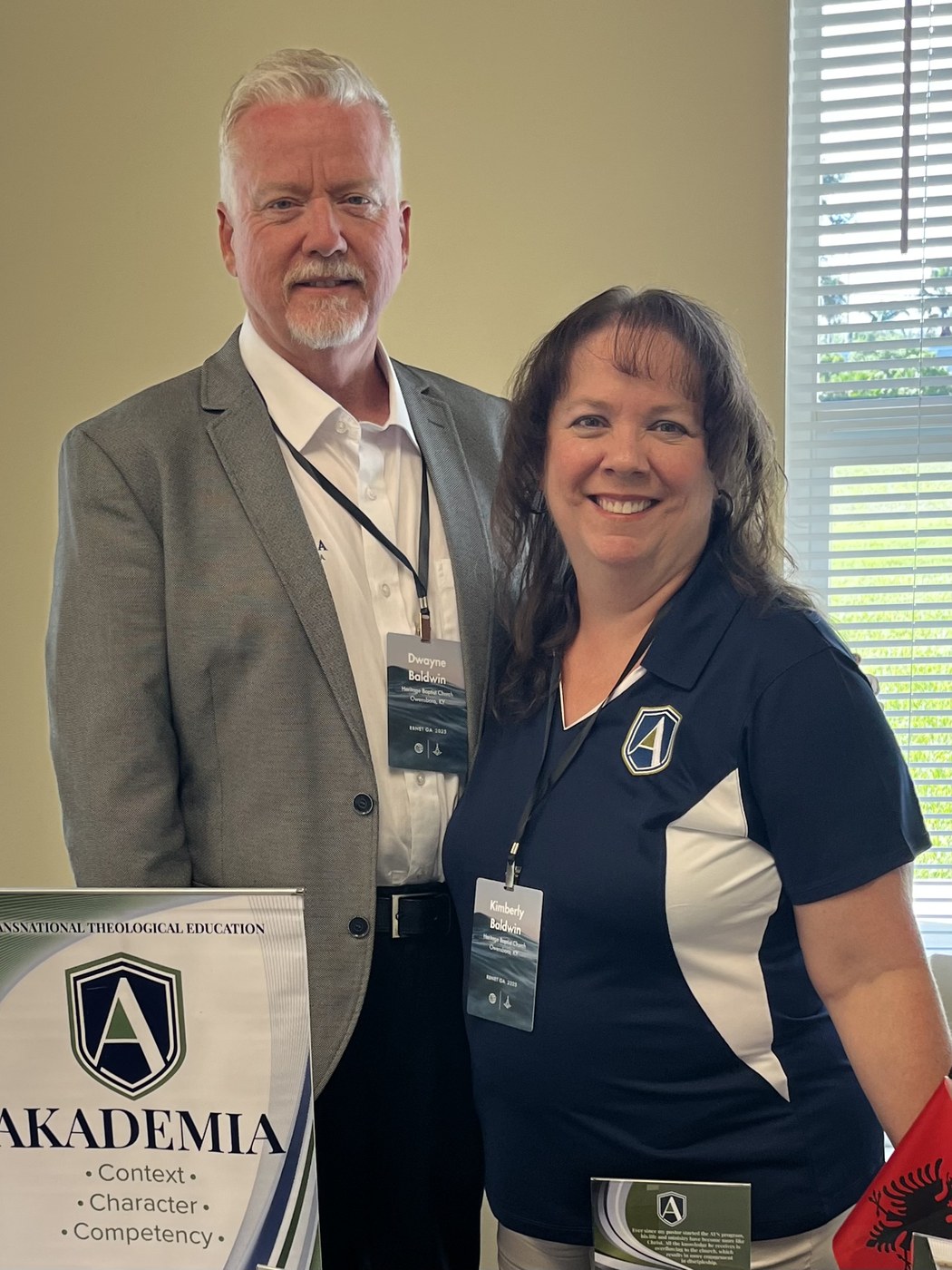
Dwayne and Kimberly Baldwin

02 · The beginning

A faithful response to a noble calling.

The modular school model began ten years ago, when a faithful couple from the United States came to help revive an existing school in Serbia. Dwayne and Kimberly Baldwin carried a burden to help people draw closer to God and become more effective in their ministries.

They obeyed the Lord’s call and inspired others to do likewise. From that example came the vision for Theological School Bratislava - a school modeled on obedience and a faithful response to God’s call.

The Baldwins are running Akademia, offering the Grace Deploy program to international students. Akademia currently serves students from Serbia, Albania, and Sicily (Italy), with new ministries opening in Europe - beginning in Slovakia and surrounding countries - as well as in Central and Latin America.

AkademiaVisit Akademia ↗

What grounds us

Biblical authority.
Historic conviction.

The school is founded on biblical standards and upholds the full authority of Scripture. We stand with the Reformers in confessing the five Solas as a clear summary of the gospel’s foundations.

Scripture is not simply part of the curriculum. It is the authority under which every course is taught.

  1. 01Sola ScripturaScripture alone
  2. 02Sola FideFaith alone
  3. 03Sola GratiaGrace alone
  4. 04Solus ChristusChrist alone
  5. 05Soli Deo GloriaGlory to God alone
Expanded statement of faithWhat we believe.1

God and His Revelation2 Timothy 3:16–17; Psalm 19:7–11

The Holy Scriptures2 Timothy 3:16–17; 2 Peter 1:20–21

The sixty-six books of the Old and New Testaments are the inspired Word of God and the final authority for faith and obedience. Scripture contains everything necessary for God’s glory, salvation, and faithful Christian living. The Holy Spirit enables believers to understand it, and Scripture is its own surest interpreter.

God and the Holy TrinityMatthew 28:19; 2 Corinthians 13:14

There is one living and true God, infinite and perfect in every way. He is eternal, self-existent, unchangeable, all-knowing, all-powerful, holy, just, good, and loving.

This one God eternally exists as three distinct persons - the Father, the Son, and the Holy Spirit - equal in divine nature, power, and glory.

God’s Gracious PurposeEphesians 1:3–11; Romans 8:28–30

From eternity, God freely and wisely ordained everything that comes to pass. His sovereignty does not make him the author of sin or remove human responsibility.

In grace, God has made salvation available in Christ to all people. Those who turn from sin and trust in Christ receive eternal life; those who persist in unbelief remain under just condemnation for their sin.

Creation, Providence, and the FallGenesis 1–3; Acts 17:24–28

CreationGenesis 1:1, 26–31; Colossians 1:16

God - Father, Son, and Holy Spirit - created the visible and invisible world in six days, and everything he made was very good.

He created humanity male and female, in his image, with immortal souls, moral responsibility, and dominion over the earth.

Divine ProvidencePsalm 103:19; Proverbs 16:9; Romans 8:28

God continually sustains, directs, and governs every creature and event according to his wise and holy purpose. His providence extends even over human sin without making him its author or excusing the sinner.

God exercises special care over his church and works all things for its ultimate good.

Humanity’s Fall into SinGenesis 3:1–19; Romans 5:12–19

Adam and Eve willingly disobeyed God and fell from their original righteousness. As humanity’s first parents and representatives, they brought guilt, corruption, and death upon their natural descendants.

Every person is therefore born with a sinful nature from which actual sins arise and is subject to God’s righteous judgment apart from Christ.

God’s Covenant and Christ’s RedemptionGenesis 17:7; Galatians 3:7–14

The Covenant of GraceGenesis 3:15; Hebrews 8:6–13

Because the distance between God and humanity is so great, people can enjoy saving fellowship with him only through his gracious initiative.

After the fall, God revealed the covenant of grace, promising salvation and eternal life through Jesus Christ. This salvation is entirely a gift of grace received through faith.

Christ the Mediator1 Timothy 2:5; Hebrews 4:14–16

Jesus Christ is the only mediator between God and humanity and the church’s prophet, priest, and king. He is fully God and fully man, conceived by the Holy Spirit and born of the virgin Mary, yet without sin.

He perfectly obeyed God, died as a substitute for sinners, rose bodily from the dead, ascended into heaven, and now intercedes for his people. He will return in glory to judge the world.

Christ’s once-for-all sacrifice is sufficient for all, and it effectively saves everyone who comes to him in repentance and faith.

The Application of SalvationEphesians 2:8–10; Titus 3:4–7

Human Freedom and the Need for GraceJohn 1:12–13; Acts 17:30; Ephesians 2:1–5

Human choices are voluntary and are not externally forced. Sin has deeply affected every person, and no one can save himself or produce the righteousness God requires. Yet God graciously calls all people to repent and believe, and those who respond to his grace may come freely to Christ.

God’s grace renews the sinner’s will so that the person freely comes to Christ and increasingly desires what is good. Only in glory will believers be perfectly and unchangeably free from sin.

God’s Gracious CallJohn 16:8–11; Romans 10:8–13

Through his Word and Spirit, God calls sinners to salvation. He awakens their minds, exposes sin, and graciously enables them to turn from sin and trust in Christ. This saving response is not earned by human merit, but it is genuinely received through faith.

This new birth rests entirely on God’s grace, not on human merit or prior action. Salvation is found in Christ alone.

JustificationRomans 3:21–28; 2 Corinthians 5:21

God freely justifies those who believe by pardoning their sins and accepting them as righteous.

This righteousness is not earned or produced by believers. It rests entirely on Christ’s obedience and sacrificial death, credited to them by God. Faith alone receives Christ, yet genuine faith never remains alone but produces love and obedience.

AdoptionJohn 1:12; Romans 8:14–17

All who are justified are adopted into God’s family through Jesus Christ. They receive his name, the Spirit of adoption, access to the Father, loving discipline, protection, provision, and the promise of an everlasting inheritance.

Sanctification2 Corinthians 3:18; 1 Thessalonians 4:3–7

Those united to Christ are set apart for God and progressively transformed through his Word and Spirit.

Sin’s ruling power is broken, although remaining corruption continues to produce spiritual conflict. By grace, believers grow in holiness and increasingly live for God.

Saving FaithRomans 10:9–17; Hebrews 11:1, 6

Saving faith is produced by the Holy Spirit, ordinarily through the ministry of God’s Word. It believes what God has revealed and responds to his commands, warnings, and promises.

Above all, saving faith receives and rests upon Christ alone for justification, sanctification, and eternal life. It may be weak or strong, but through Christ it ultimately endures.

RepentanceMark 1:15; 2 Corinthians 7:9–10

Saving repentance is a grace by which sinners recognize the evil of their sin, grieve over it, turn from it, seek God’s mercy in Christ, and pursue faithful obedience.

Repentance continues throughout the Christian life and should address known sins honestly and particularly. No sin is too great to condemn a person who truly repents and trusts in Christ.

Good WorksMatthew 5:16; Ephesians 2:10; James 2:14–18

Good works are those God commands in Scripture. They are the fruit and evidence of genuine faith, glorify God, strengthen assurance, help others, and adorn the gospel.

Good works cannot earn forgiveness or eternal life, since even our best efforts remain imperfect. Our ability to do good comes entirely from the Spirit of Christ.

God’s Preservation and Our PerseverancePhilippians 1:6; Hebrews 10:23–25

God faithfully keeps all who are united to Christ, and believers are called to continue in faith, repentance, and obedience. Scripture warns against falling away, and it assures us that God supplies grace to preserve those who remain in Christ.

God’s preserving grace, Christ’s intercession, the Spirit’s presence, and the believer’s continuing trust all give strength for the Christian life. Believers may fall into serious sin for a time, but God calls them to repentance, restores them, and completes his work in all who remain faithful to Christ.

Assurance of SalvationRomans 8:15–16; 1 John 5:11–13

True believers may possess a well-grounded assurance of salvation based on God’s promises, the evidence of grace in their lives, and the Spirit’s witness.

Assurance is not the essence of saving faith and may take time to develop. It may be weakened through sin, negligence, or severe trials, yet God preserves his people from final despair.

The Christian LifeRomans 12:1–2; Colossians 3:1–17

The Law of GodMatthew 22:37–40; Romans 3:31

God’s moral law reflects his righteous character and permanently binds all people.

The ceremonial laws given to Israel were fulfilled and ended in Christ. Israel’s civil laws expired with that nation, although their underlying principles of justice remain instructive.

Believers are not justified by the law, but it continues to reveal God’s will, expose sin, guide faithful living, and show their continuing need for Christ.

The GospelRomans 1:16–17; 1 Corinthians 1:18–25

After the fall, God revealed the gospel through the promise of Christ. Knowledge of salvation through Christ comes through God’s revealed Word, not through nature or human reason alone.

The outward proclamation of the gospel must be accompanied by the Holy Spirit’s effective work for sinners to be converted.

Christian Liberty and ConscienceGalatians 5:1, 13; Romans 14:1–12

Christ frees believers from the guilt and dominion of sin, the law’s condemnation, slavery to Satan, and the fear of death. He gives them free access to God and enables willing, childlike obedience.

God alone is Lord of the conscience. No person or institution may require belief or obedience contrary to Scripture or impose human teachings as though they carried divine authority.

Christian liberty must never be used as an excuse for sin.

Civil GovernmentRomans 13:1–7; 1 Peter 2:13–17

God established civil authorities for the public good, the protection of those who do right, and the punishment of wrongdoing.

Christians may hold public office and, when justice and necessity require it, participate in lawful defense. Believers should pray for authorities, honor them, pay what is owed, and obey lawful commands unless obedience would require disobedience to God.

MarriageGenesis 2:18–24; Matthew 19:4–6

Marriage is a covenantal union of one man and one woman. It is given for mutual help, the honorable raising of children, and the prevention of sexual immorality.

Believers should marry in the Lord, and marriage must not occur within relationships forbidden by Scripture.

Christ and His ChurchEphesians 1:22–23; Colossians 1:18

The ChurchMatthew 16:18; Acts 2:42–47

The universal church consists of all whom God has redeemed and united under Christ, its only head.

A local church is a gathered congregation of professing believers who commit themselves to Christ and to one another under his Word. Christ gives each church the responsibility to worship, teach, appoint qualified elders and deacons, practice discipline, and observe his ordinances.

Churches should cooperate and seek one another’s counsel while retaining responsibility for their own affairs.

The Communion of SaintsActs 2:42–47; 1 Corinthians 12:12–27

All believers are united to Christ and therefore to one another. They are called to use their gifts, prayers, encouragement, service, and material resources for each other’s good.

This fellowship should extend, as opportunity allows, to the whole household of faith.

Death, Resurrection, and JudgmentJohn 5:28–29; 1 Thessalonians 4:13–18

The State after DeathLuke 23:39–43; 2 Corinthians 5:6–8

At death, the body returns to dust while the soul continues consciously before God.

The righteous are received into paradise with Christ, while the wicked remain under punishment awaiting judgment. Scripture teaches no third state for departed souls.

The Resurrection1 Corinthians 15:20–26, 42–49

At Christ’s return, the dead will be bodily raised and reunited with their souls. The righteous will be raised to everlasting glory and the unrighteous to dishonor.

The Last JudgmentMatthew 25:31–46; Revelation 20:11–15

God has appointed a day when Jesus Christ will judge fallen angels and every person with perfect righteousness.

The redeemed will enter everlasting life and joy in God’s presence, while the unrepentant will receive everlasting punishment.

Because the time of Christ’s return is unknown, everyone should turn from sin, find comfort in God’s promised justice, and remain watchful for the Lord’s coming.
1 This abbreviated statement of faith draws heavily from the 1689 London Baptist Confession. As the school is non-denominational, students are free to hold differing views. The school does not require students to change their convictions.

A school without denominational walls

Come from any background.
Come ready to grow for God’s honour & glory.

Bachelor’s entry requirementBachelor’s-level applicants must have completed secondary education. Any three- or four-year secondary school qualification is accepted. For applicants who have not completed secondary school and wish to earn a bachelor’s degree, completed Bible schools and courses may be recognized as sufficient entry preparation. The recognition of credits is assessed individually.

01

Adult admission

When applications open, they will be accepted only from adults aged 18 and over, from all church traditions and denominational backgrounds. A sincere desire to learn is where the journey begins.

02

Responsible student care

Applicants must disclose relevant health conditions or therapies that could significantly affect personal safety, mental wellbeing, or participation during the intensive modules.

03

Individual review

Disclosures are reviewed individually as part of admissions. The school may decline or discontinue enrolment when it cannot responsibly provide the level of care or support required.

How admission works

From first contact
to student account.

The process is designed to help the school and applicant get acquainted before enrolment. It begins with a brief form and ends when the registrar creates the student’s school email and portal access.

  1. 01Step

    First contact

    Complete the ‘First contact’ form with basic information and reliable contact details. The school administration will then reach out to arrange an interview.

    Open the First contact form
  2. 02Step

    Personal interview

    The interview is an opportunity to get acquainted and to hear the applicant’s life story, church background, and reasons for pursuing theological education.

  3. 03Step

    Two recommendations

    After the interview, provide two email addresses: one for a pastor or elder and one for a close friend - preferably a brother or sister in Christ because of the nature of the questions. The school sends both recommendation forms directly and reviews the completed responses.

  4. 04Step

    Enrolment and access

    Once the recommendations are reviewed, the applicant receives instructions by email, or an invitation to an additional conversation if needed. The registrar then provides the online enrolment form. After submission, the registrar creates a school email address and portal account for course information, assignments, and grades.

Step one · First contact

Begin the conversation.

Share a few basic details and the school administration will contact you to arrange the initial interview.

Thank you. Your First contact message has been sent to the school administration.

Your details will be emailed to the school administration. Please do not include sensitive health or therapy information in this first-contact form.

Applications are not yet open

Explore the pathways and begin a conversation.

Choose the Bachelor’s, Certificate, or Audit pathway as you consider four years of biblical learning, with four focused modules in each academic year in Bratislava. Feel free to contact us with any questions.

Explore the programs Questions are welcome through our first-contact form

Endorsement

A trusted partner.
Shared conviction.

The school is grateful for the endorsement and encouragement of Grace Theological Seminary as we prepare leaders for faithful ministry.

I am pleased to commend Miroslav Rybar for his vision to equip and prepare Christian leaders throughout Central Europe and beyond through the founding of Theological School Bratislava, where he serves as Founder and Dean.

Miroslav brings to this work a substantial combination of pastoral experience, theological education, academic administration, and ministry leadership. For many years, he has served faithfully in pastoral ministry within a large and influential Slovak congregation. His commitment to Christian ministry and to the development of others led him to further theological study at Baptist Theological School in Novi Sad, Serbia.

Before and after completing his studies there, Miroslav served for several years in senior academic administration within the Provost's Office. In that role, he gained significant experience in important areas of theological education. These have included academic administration, curriculum development, assessment, student services, and institutional leadership. These responsibilities provided him with valuable insight into both the educational, organizational, and development work required to lead a growing theological institution.

Miroslav later entered a graduate program hosted by Akademia of Čenej, Serbia conducted in partnership with Grace Theological Seminary (Winona Lake, Indiana) within the United States. Following three years of sustained study, he completed the Master of Arts (M.A.) in Local Church Ministry through Grace Theological Seminary. Grace Theological Seminary is accredited by the Association of Theological Schools in the United States and Canada, the principal accrediting association for graduate theological education throughout North America.

During this season of pastoral ministry, theological study, and academic leadership, Miroslav has benefited from the close mentorship of Dr. Dwayne Baldwin, former Provost of Baptist Theological School and President of Akademia. I also have had the privilege of being personally involved in Miroslav's life, education, and ministry over several years. My relationship with him has included visits to his congregation and the institutions in which he has served, as well as opportunities to host him in the United States - on several occasions.

Through these experiences, I have come to know Miroslav as a thoughtful, committed, and forward-looking theological leader. He has developed strong relationships with theological educators, pastors, ministry leaders, mission organizations, and theological institutions across Central and Eastern Europe and the Balkan region, including Grace Theological Seminary. He has earned the trust and respect of Christian leaders in several countries and has demonstrated both courage and initiative in establishing a new institution devoted to theological education and ministry preparation.

His previous experience with the modular educational model developed under Dr. Baldwin, together with his graduate formation through Grace Theological Seminary's competency-based approach to theological education, has prepared him well for the responsibilities of seminary leadership. He understands that effective theological education must combine biblical and theological depth, ministerial competence, personal spiritual formation, and practical preparation for service in the church.

Theological School Bratislava represents an important opportunity to strengthen theological education and ministry training throughout the wider region of Central Europe. Its development reflects Miroslav's desire to make rigorous, ministry-centered theological education more accessible to those preparing to serve Christ and His Church.

Through my years of close association with Miroslav and my direct involvement in his education and ministry, I gladly recommend Theological School Bratislava to those seeking serious preparation for faithful Christian ministry.

Endorsement 02

Another voice.
Coming soon.

A future endorsement will appear here.

Endorsement coming soon